
Plan a Sicily UNESCO heritage itinerary in 7 days with Baroque towns, Greek ruins, Arab-Norman Palermo, Mount Etna, and elegant private travel.

Some trips are built around scenery. A true Sicily UNESCO heritage itinerary is built around civilizations layered one over another – Greek, Roman, Arab, Norman, Spanish, and Baroque – often within the same day. That is what makes Sicily so rewarding, and also why planning it well matters. Distances look manageable on a map, but the rhythm of the island is best enjoyed when each stop has space to breathe.
For travelers who want culture without rush, seven days is a strong starting point. It allows you to experience Sicily’s UNESCO sites as a connected story rather than a checklist, while still leaving room for long lunches, coastal drives, and the small moments that make the island feel personal. The itinerary below is designed for travelers who value comfort, expert local insight, and the ease of moving through Sicily with intention.

Why choose a Sicily UNESCO heritage itinerary
Sicily has seven UNESCO World Heritage recognitions, and several can be combined into one well-paced journey. What makes this especially appealing is the variety. You move from ancient temples to late Baroque towns, from volcanic landscapes to Byzantine mosaics, without the repetition that sometimes affects heritage-focused travel elsewhere.
The trade-off is logistics. Some sites are clustered naturally, while others require careful sequencing to avoid long backtracking days. A private itinerary works particularly well here because it gives you the freedom to spend more time where your interests pull you – archaeology for one traveler, food and architecture for another – while keeping the route elegant and efficient.

A 7-day Sicily UNESCO heritage itinerary
Day 1 – Val di Noto and the Sicilian Baroque
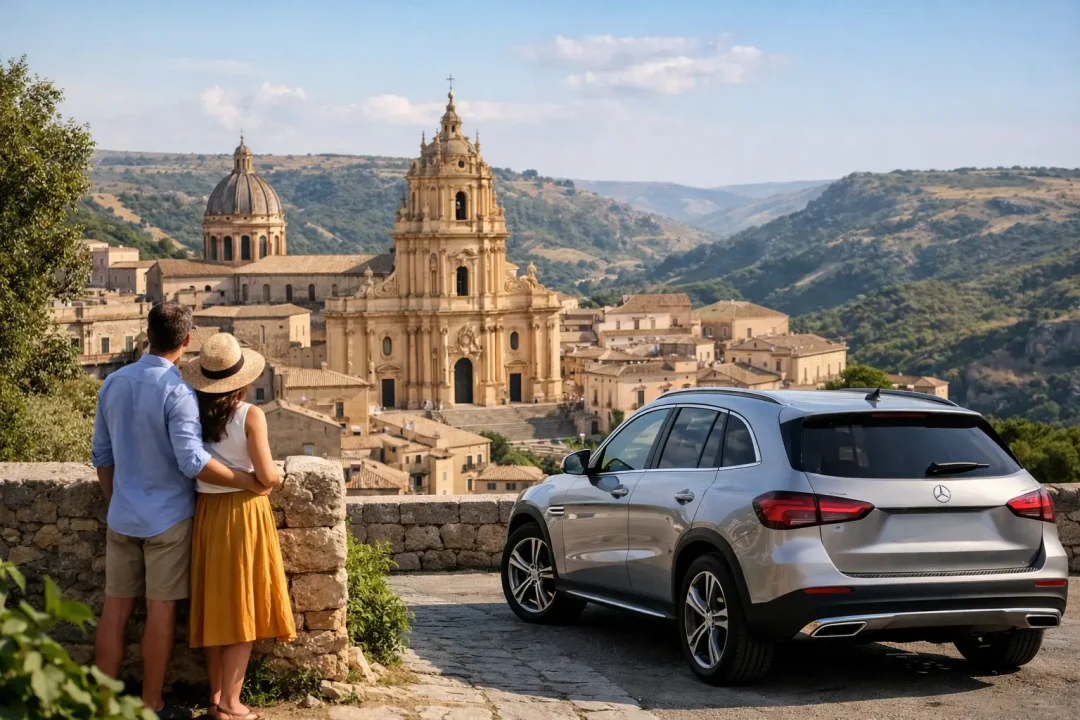
Begin in southeastern Sicily, where the Late Baroque Towns of the Val di Noto reveal one of the island’s most distinctive artistic chapters. After the devastating earthquake of 1693, entire communities were rebuilt with extraordinary theatrical flair. Balconies curve outward, church facades seem to move in the light, and honey-colored stone turns luminous by late afternoon.
Noto is often the emotional center of this experience, with its harmonious main street and refined urban design. Ragusa Ibla offers a different mood – more intimate, more layered, and especially atmospheric as the streets begin to quiet in the evening. Modica adds yet another dimension, where Baroque architecture meets a deeply rooted culinary tradition.
Trying to see every town in one day can flatten the experience. Two or three well-chosen stops are usually better than racing through five. If your interests lean toward architecture and photography, spend more time in Noto and Ragusa. If gastronomy matters just as much, Modica deserves a generous pause.

Day 2 – Syracuse and the rocky necropolis of Pantalica
Syracuse brings together grandeur and intimacy in a way few Mediterranean cities can. The Archaeological Park speaks to the power of the ancient Greek world, while Ortigia, with its layered streets and sea-facing elegance, gives the day a lived-in beauty beyond the ruins.
UNESCO recognizes Syracuse together with the rocky necropolis of Pantalica, and the pairing makes sense. One reflects urban splendor and political power; the other speaks to prehistoric settlement and the relationship between people and landscape over centuries. Pantalica is less monumental at first glance, but that is part of its value. It asks for slower attention.
This is one of the clearest examples of why a curated day matters. Syracuse can easily fill an entire itinerary on its own, but when balanced properly with Pantalica, the day becomes richer rather than crowded. The right pacing makes the contrast memorable.

Day 3 – Villa Romana del Casale and Piazza Armerina
The Villa Romana del Casale is one of Sicily’s most remarkable UNESCO sites because it preserves private luxury on an astonishing scale. Its Roman mosaics are not merely decorative fragments. They create a near-continuous visual world of mythology, hunting scenes, geometric sophistication, and daily life.
Even travelers who are not especially drawn to archaeology tend to be captivated here. The mosaics feel immediate and surprisingly modern in their detail. You do not need to imagine the richness of elite Roman life – it is right in front of you, floor after floor.
This stop works best as a dedicated cultural day rather than an add-on squeezed between longer transfers. Pairing it with the elegant town of Piazza Armerina creates a softer rhythm and gives the experience context. It is also a welcome midpoint in the itinerary, shifting the focus from urban heritage to the island’s interior.

Day 4 – Mount Etna and the spirit of the landscape
UNESCO recognition in Sicily is not limited to architecture and monuments. Mount Etna represents the island’s living geology, and it changes the emotional register of the journey. After days of churches, mosaics, and ancient stone, Etna offers vastness, silence, and movement.
What makes Etna special is that it is both dramatic and deeply inhabited. Vineyards, villages, and old lava flows exist side by side. Depending on weather, season, and your preferred level of activity, the day can be shaped around panoramic viewpoints, gentle walks, food and wine experiences on the slopes, or a more immersive volcanic exploration.
This is also a day where comfort becomes especially valuable. Mountain routes and changing conditions can make timing unpredictable, so a professionally managed itinerary allows you to enjoy the experience without watching the clock. For many travelers, Etna becomes the day that gives the whole trip breath.
The western chapter of a Sicily UNESCO heritage itinerary
Day 5 – Arab-Norman Palermo and the cathedral churches of Cefalu and Monreale
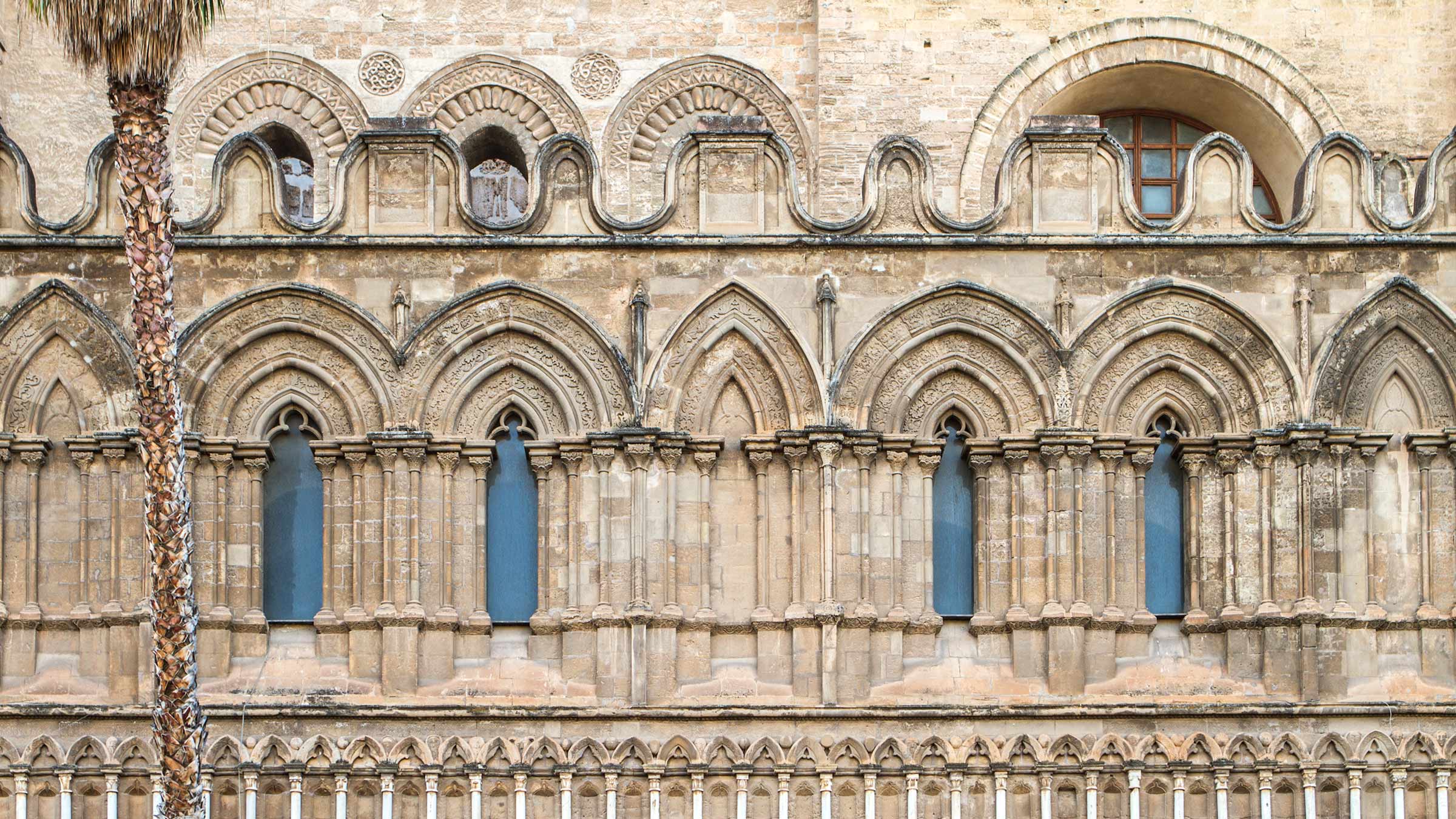
Western Sicily introduces one of the most sophisticated cultural syntheses on the island. The UNESCO listing for Arab-Norman Palermo and the cathedral churches of Cefalu and Monreale is not just about beauty, although beauty is everywhere. It is about what happens when Islamic artistic influence, Norman ambition, and Byzantine craftsmanship come together in one courtly world.
Palermo is vibrant, layered, and at times deliberately overwhelming. Monreale offers a more concentrated sense of magnificence, especially in its mosaics, while Cefalu adds coastal grace to the story. Seen together, they reveal a chapter of Sicily that feels intellectually rich as well as visually unforgettable.
This is one of the itinerary’s most rewarding days, but also one that benefits from selectivity. Palermo has many monuments included in the UNESCO recognition, and trying to see too many can become exhausting. Better to focus on the highlights that match your interests and allow time for the city’s atmosphere in between.

Day 6 – Agrigento and the Valley of the Temples
Few places in Sicily feel as immediately iconic as the Valley of the Temples. The site is vast, but the architecture remains strikingly legible. You can understand its scale, its ceremonial power, and its relationship to the landscape without needing specialist knowledge.
Agrigento is often described in terms of sunset, and for good reason. The warm light across the temples creates one of the island’s great visual memories. Yet this is not only a scenic stop. It is central to understanding Sicily’s Greek heritage and the reach of the ancient Mediterranean world.
If you have already visited Syracuse, you may wonder whether another major archaeological site will feel repetitive. In practice, the two experiences are quite different. Syracuse is urban and layered. Agrigento feels more monumental and open, with the landscape itself becoming part of the interpretation.

Day 7 – A day for depth, not distance
The final day should resist the temptation to add one more major transfer. By this point, the richest choice is often to revisit what has resonated most strongly – Palermo’s artistic complexity, Etna’s volcanic landscape, or the Baroque southeast if your route begins there. A heritage itinerary becomes more meaningful when there is time to absorb, not just arrive.
For some travelers, this day is ideal for a private walking experience in a historic center. For others, it is better spent with a slower lunch, a scenic drive, and selected cultural stops that deepen the story already unfolding. This is where personalized planning makes the difference between a very good trip and one that feels entirely your own.

How to make the itinerary feel elegant rather than ambitious
A Sicily UNESCO heritage itinerary succeeds when the route respects both geography and energy. The island rewards ambition, but not haste. Two major heritage visits in one day can work when they are naturally paired, as with Syracuse and Pantalica, or Palermo and Monreale. Beyond that, the experience can start to feel compressed.
Season also matters. In warmer months, archaeological sites are best enjoyed earlier or later in the day, while city visits benefit from shaded walking routes and well-timed pauses. In cooler seasons, longer cultural days are often more comfortable and can include a broader mix of inland and urban stops.
Travel style matters just as much. Couples may want a more romantic pace with long scenic lunches and sunset arrivals. Families often benefit from fewer transitions and more open space. Small private groups can build in wine, food, or artisan experiences without losing the UNESCO focus. There is no single perfect version – only the version that fits your priorities well.
For travelers who want to experience these sites with comfort, clarity, and local insight, a private service-led approach removes the usual friction. Handy Sicily, for example, can shape the route around your pace while providing the comfort of luxury vehicles and the confidence of knowledgeable English-speaking drivers and driver-guides.
Sicily is not a place to hurry through for proof that you have seen it. It is a place to move through with curiosity, where each UNESCO site adds another layer to the island’s long, fascinating conversation with history.